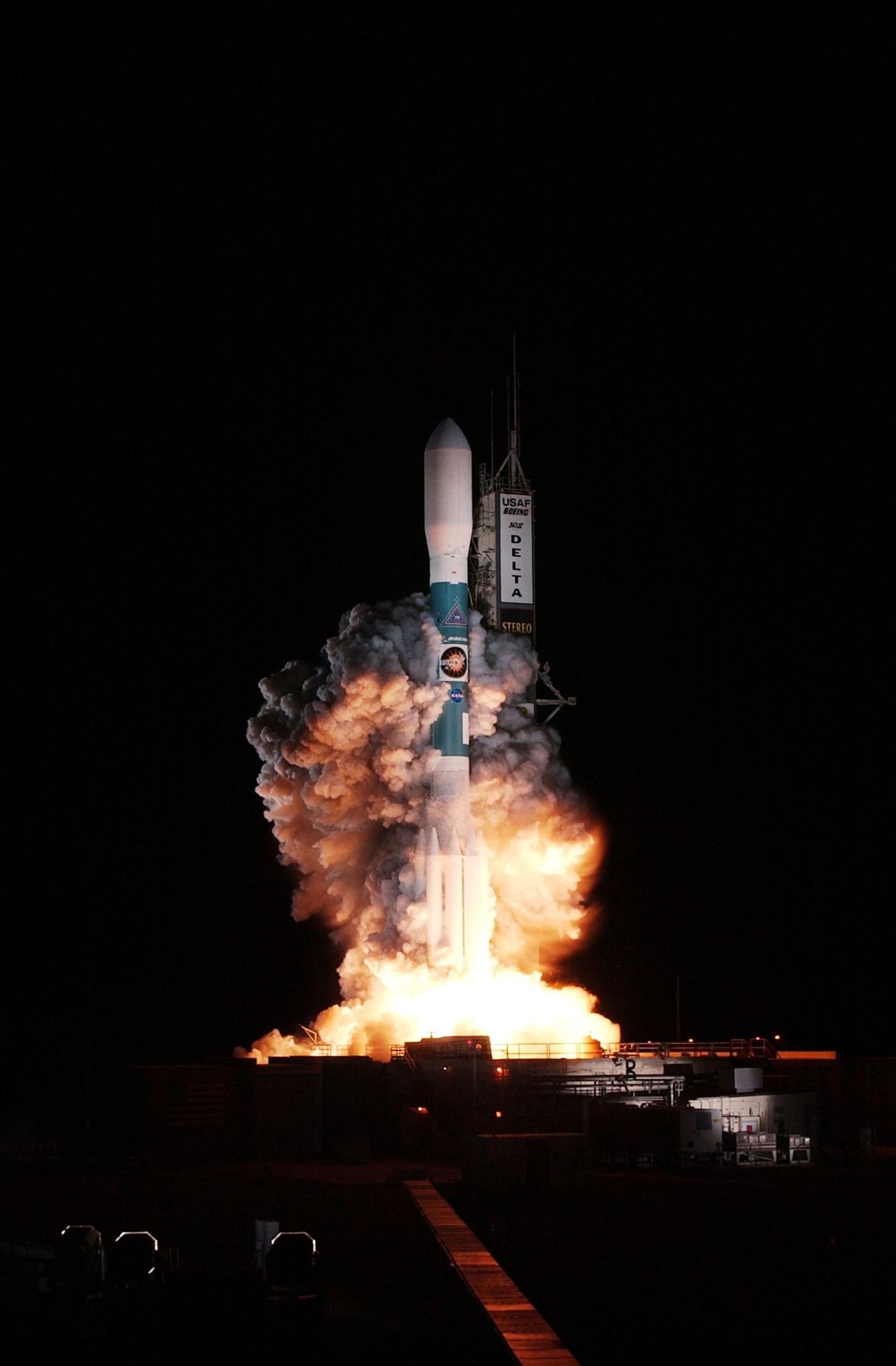
NASA’s Artemis II launch in April 2026 tore large holes in Earth’s ionosphere and disturbed GPS signals across the United States, according to a study reported in November 2026. Researchers from Taiwan’s National Cheng Kung University found three disturbances stretching about 3,100 miles, or 5,000 kilometres, across North America. The effects were up to 10 times more intense than those seen after SpaceX Starship test launches, despite Starship having roughly twice the liftoff thrust of NASA’s Space Launch System rocket. Ground stations detected changes in electron density equivalent to positioning errors of several metres. The ionosphere is an electrically charged region of the upper atmosphere that plays an important role in radio communication and satellite-based navigation, so disturbances there can ripple into everyday technologies far beyond spaceflight itself.
What the Evidence Shows
The first disturbance followed the 65-metre core stage after liftoff on 1 April 2026, at the start of the crewed nine-day flight around the Moon. Two more followed upper-stage engine burns, about two hours later and more than 24 hours after launch. Co-author Charles Lin warned that even small positioning errors could affect autonomous vehicles that rely on GPS data. The study, reported by Space.com on 4 November, recorded no GPS outage or navigation failure. As a preprint, its conclusions remain provisional. The researchers also noted that the disturbances were far greater than those recorded during previous rocket launches, raising questions about how future heavy-lift missions should be planned alongside the growing use of GPS-dependent systems on the ground. Reporting and analysis from sources such as NASA track the same developments, and specialists following the Artemis II ionosphere disturbances say the direction is now consistent across independent lines of evidence.
The Wider Context
Funding bodies are watching the Artemis II ionosphere disturbances closely because the work sits at the junction of basic curiosity and practical return. Grant panels increasingly ask for a path from discovery to application, while researchers push back that the most valuable uses of fundamental science are rarely the ones written into the original proposal. The tension is productive when both sides stay honest about timescales.
What Happens Next
The long view on the Artemis II ionosphere disturbances is that fields advance by accumulation rather than by single announcements. This result adds a solid, checkable piece to a structure many teams are building, and its authors have shared their data so the piece can be tested from every side. That is how the picture eventually becomes reliable enough to act on. You can follow related developments in our coverage of science.
It is also worth remembering how quickly the picture in this area has changed before. Positions that looked settled a few years ago have been revised as new data arrived, and the same humility is appropriate now. The strongest coverage of this subject, and the most useful advice, tends to come from sources that update their views openly when the facts move, rather than defending an earlier position long after it has stopped fitting the evidence available.